
Inventory Management Best Practices for Kashmir's Fertilizer and Seed Shops
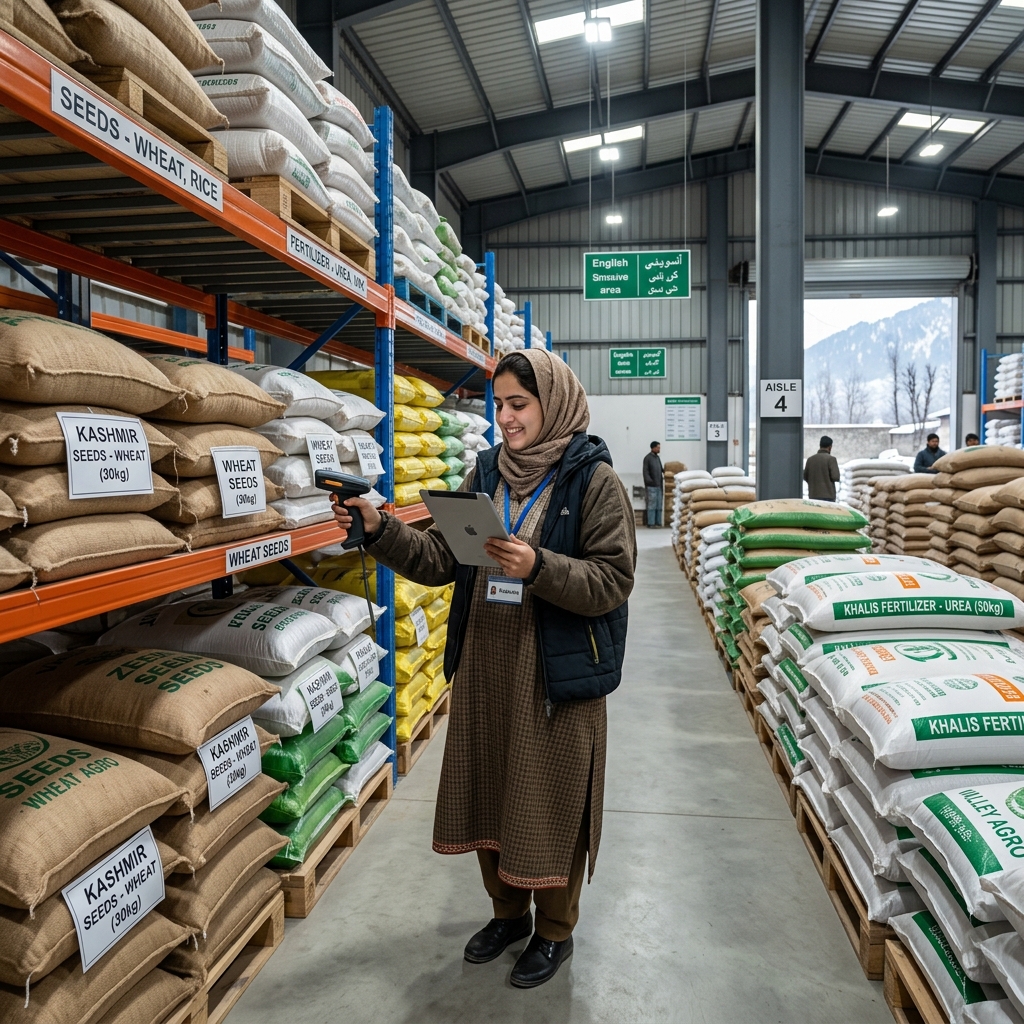
Walking into a busy fertilizer and seed shop in Kashmir during peak sowing season is an exercise in organized chaos. Sacks of urea are stacked high, bottles of weedicides are flying off the shelves, and farmers are lining up for advice.
In this environment, maintaining an accurate physical count of your inventory is nearly impossible if you rely on memory or periodic notebook tallies. Poor inventory management leads to two catastrophic scenarios: Stockouts (running out of a high-demand product) and Overstocking (tying up capital in slow-moving items).
The Dangers of Blind Inventory
When you don’t know exactly what is in your warehouse in real-time, you are operating blindly.
- The Stockout Scenario: A farmer urgently needs a specific apple scab fungicide. You think you have a case in the back, but after 10 minutes of searching, you realize you sold the last bottle yesterday. The farmer leaves and buys from your competitor. You lost a sale and potentially a loyal customer.
- The Overstock Scenario: Worried about running out, you order 500 liters of a chemical you only sell 100 liters of per season. That excess stock ties up your cash flow, taking up valuable warehouse space, and risks expiring before next year.
Digital Inventory Management: The Best Practices
Implementing a software solution like Kashmir Pesticides instantly modernizes your godown. Here are the best practices you can achieve immediately:
1. Set Reorder Points (Low Stock Alerts)
A smart digital system allows you to set a minimum threshold for every product. If you know it takes your distributor 3 days to deliver, you can set the system to alert you when your stock of a critical fertilizer drops below a 5-day supply. This guarantees you never run out during peak season.
2. Conduct Rolling Physical Audits
Instead of shutting down the shop for three days at the end of the year to count everything, use your software to conduct “rolling audits.” Check the digital stock level of one specific brand or category each week, physically count it, and reconcile any differences immediately.
3. Track Stock Movement Velocity
Digital reporting allows you to see exactly which products move the fastest and generate the most profit. You might discover that a cheap, high-volume pesticide actually yields less annual profit than a specialized, lower-volume fertilizer. This data allows you to optimize your purchasing decisions and maximize your return on investment.
Stop guessing what is in your godown. Let the software track every milliliter and gram, so you can focus on serving the farmers of Kashmir.